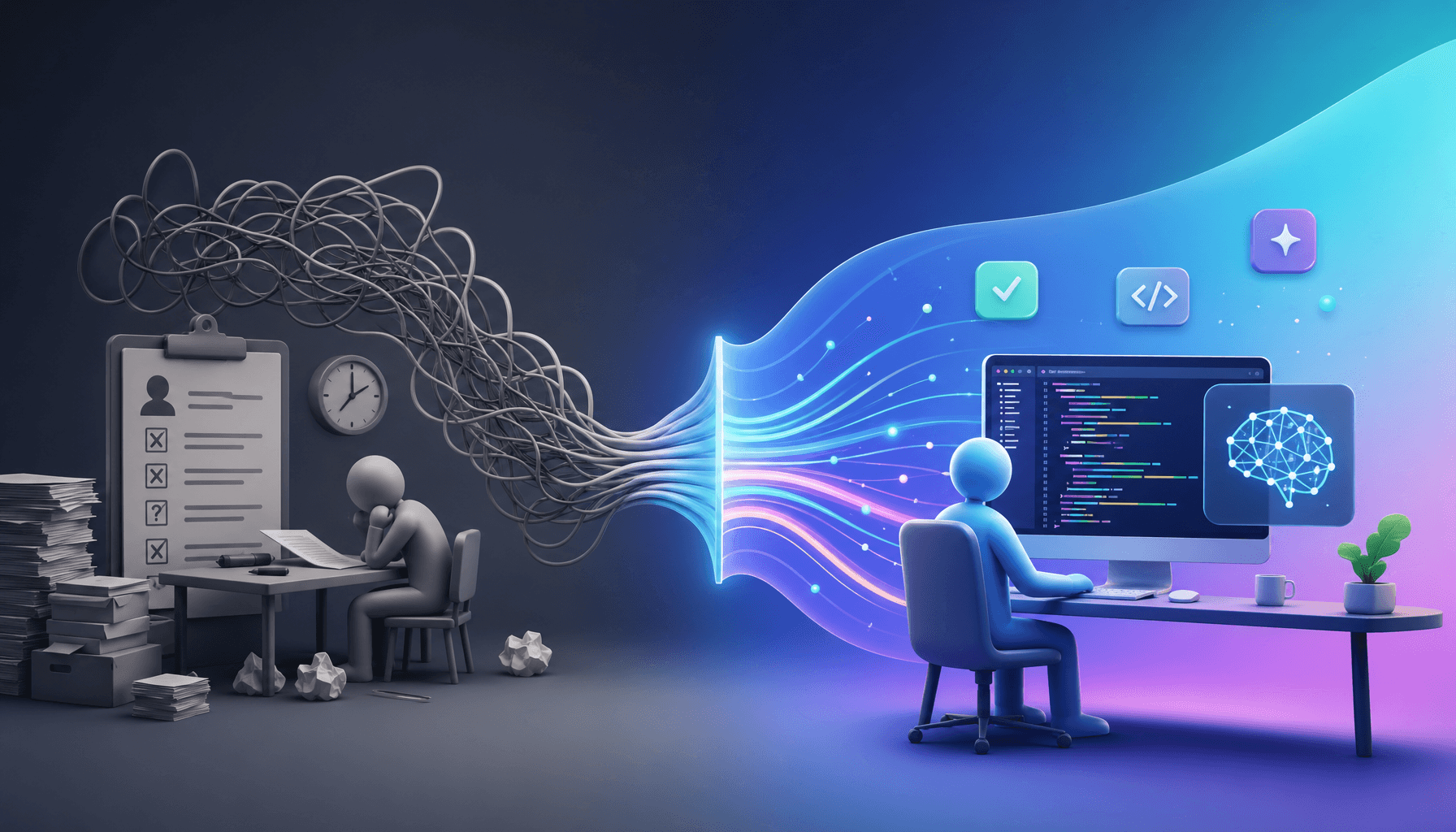
Vestigial Interview Processes
The modern tech interview is broken.
The typical process includes a recruiter screen, a product interview, a code simulation, maybe a system design interview, and maybe a final culture-fit interview.
This process has existed for roughly 20 years in more or less the same shape. It has always been notoriously flaky and a poor predictor of eventual success. Some of the worst engineers I’ve worked with have been the best at coding quizzes. Some of the best engineers I’ve worked with did not do well in coding interviews.
The underlying problem is that coding quizzes have never been representative of the actual work of being a software engineer.
They happen in artificial environments. Browser-based IDEs. Contrived problems. Handcuffs like forbidding web search or limiting resources. Sometimes they use toy languages to “level the field.” Sometimes they use real technologies, but create artificial problems that don’t actually happen in real systems.
The root of it all is that people think software engineer means coder.
That was never completely true. It has become dramatically less true over time.
Typing Code Is No Longer the Bottleneck
Typing code is now the cheapest part of the job; judgment, system design, and review are the expensive parts.
That statement makes people uncomfortable, but it’s where we are. Real engineering work is about understanding systems, making tradeoffs, sequencing work, collaborating, and making good product decisions under uncertainty. Typing code is a small part of that loop.
AI coding tools have become controversial in exactly the wrong way. Some people still see AI as cheating or as a dangerous shortcut. Others argue that “vibe-coded” apps fall apart as they scale and still require “real engineers” to fix them.
That critique used to be partially true. It is becoming less true by the month.
Claude Opus 4.5 was a watershed moment. Many of the historical limitations of AI coding tools are rapidly disappearing. Frontier models can now read documentation instantly, reason over large codebases, write production-quality code faster than any human, and work for hours without fatigue.
Every.to has been writing extensively about this shift. Their piece on the death of the IDE captures the moment well:
https://every.to/source-code/what-the-team-behind-cursor-knows-about-the-future-of-code
The Workflow Has Changed
The modern development workflow looks something like this:
- Open Claude (or Cursor) and plan the work
- Work through edge cases and priorities
- Tell the model to build it
- Get alerted when it needs feedback or finishes
- Review, test, and merge the PR
- Repeat
This work can happen in parallel across unrelated parts of a codebase. It works just as well for non-coding projects.
The IDE itself has evolved to the point where its original purpose—as a text editor—is becoming irrelevant. Planning, judgment, and review matter more than keystrokes.
Coding isn’t disappearing entirely. But it is no longer the primary skill.
Vestigial Interviews
Few companies are adapting to this reality. Most are stuck in mental models from five years ago.
The coding interview persists not because it works, but because it is easy to standardize, easy to justify, and feels objective. It is institutional muscle memory.
If companies actually wanted to evaluate modern engineers, they would focus on:
- real code
- real systems
- real judgment
- real collaboration
- real constraints
Instead, we keep testing trivia and performance under artificial pressure.
The world has changed. Typing code is no longer the hard part of the job, and interviews should measure the parts that are.
Like an appendix, it remains not because it helps—but because no one has removed it yet.